

Choosing a reliable used vehicle is a major decision, but figuring out the best way to pay for it is just as crucial for your financial health. The debate between weekly vs. monthly car payments often comes down to personal budgeting style and income frequency. While a single monthly payment is the traditional route, more frequent options like weekly or bi-weekly payments can offer significant advantages. For many drivers, especially those who are paid weekly, smaller, more manageable payments can make budgeting simpler and reduce financial stress. This choice can impact your cash flow, your ability to pay off your loan faster, and even the total amount of interest you pay over time. Understanding the pros and cons of each schedule is the first step toward selecting one of our affordable and accessible financing options that truly works for you.
Ultimately, there is no single "correct" answer to whether weekly or monthly payments are superior. The best choice is the one that aligns seamlessly with your pay schedule and financial habits. A monthly payment might be perfect for someone with a consistent monthly salary, while weekly payments provide stability for those with weekly paychecks. Our dedicated finance team is here to walk you through each option, helping you find a payment structure that builds your credit and fits comfortably within your budget. Learn more about how it works and let us help you drive away with confidence.
A Deep Dive into Car Payment Frequencies
When you secure an auto loan, the payment frequency is a core component of the agreement. While most people are familiar with the standard monthly payment, it is far from the only option available, especially at dealerships that specialize in flexible financing. To make the most informed decision for your financial situation, it is important to understand the mechanics, benefits, and drawbacks of each primary payment schedule.
The Traditional Approach: Monthly Car Payments
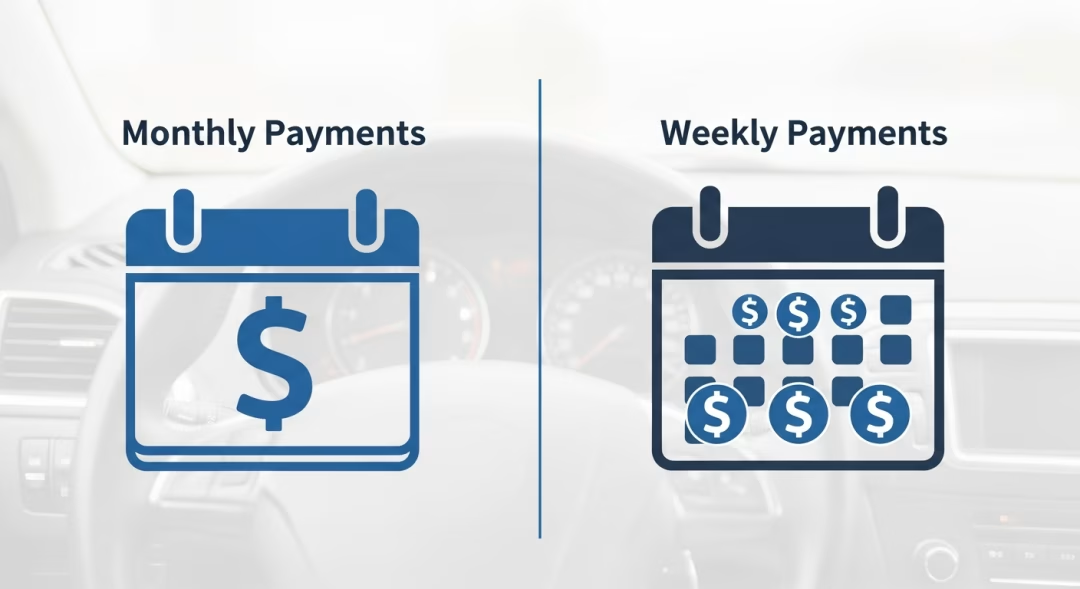
The monthly payment is the most common structure for all types of loans, from mortgages to personal loans. It is straightforward: one payment is due on the same date each month for the duration of your loan term. This method has long been the standard for traditional banks and credit unions.
- Pros: The main advantage is simplicity. With only one payment to track, it is easy to set up automatic withdrawals and align it with other major monthly expenses like rent or utility bills. This predictability can make long-term financial planning feel more organized.
- Cons: The primary downside is the size of the payment. A single, large withdrawal can put a significant dent in your bank account, potentially making the rest of the month tight. If you are not a meticulous budgeter, you might accidentally spend the money allocated for the car payment before it is due. Furthermore, because interest accrues daily, a full month between payments means you accumulate more interest compared to more frequent payment schedules.
The Cash-Flow Friendly Method: Weekly Car Payments
A weekly payment schedule breaks down your monthly obligation into four or five smaller payments. This option is particularly popular at Buy Here Pay Here (BHPH) dealerships because it is designed to sync perfectly with customers who receive a weekly paycheck. Instead of managing a large lump sum, you handle a much smaller, more digestible amount each week.
- Pros: The psychological and practical benefits are significant. A smaller payment feels less intimidating and is easier to manage, reducing the risk of missing a payment. It simplifies cash flow management by aligning your largest expense directly with your income stream. Paying a portion of your principal every week also means you are chipping away at the loan balance faster, which can lead to modest savings on total interest paid over the life of the loan. For those with bad credit car loans, the consistency of weekly payments can be an excellent tool for rebuilding a positive payment history.
- Cons: The main drawback is the increased number of transactions. You will have four or five payments leaving your account each month instead of one, which requires careful tracking to ensure everything is processed correctly. However, this can be easily managed by setting up automated payments.
The Savvy Saver's Secret: Bi-Weekly Payments
A bi-weekly payment plan can be one of the most powerful tools for paying off your car loan ahead of schedule. On the surface, it seems like you are just splitting your monthly payment in half and paying it every two weeks. However, the math works in your favor. There are 52 weeks in a year, which means 26 bi-weekly payment periods. If your bi-weekly payment is half of your monthly payment, making 26 of them is equivalent to making 13 full monthly payments over the course of a year, not 12.
- Pros: That one extra "phantom" payment each year goes directly toward your loan's principal balance. This has a compounding effect: it reduces your loan term, builds equity in your vehicle faster, and can save you a substantial amount in total interest charges. Like weekly payments, it also aligns well with bi-weekly pay schedules.
- Cons: It is crucial to ensure your lender applies the extra payments correctly to the principal. Some lenders may simply hold the funds and apply them to the next month's payment, negating the interest-saving benefits. When you work with us, our finance experts ensure your payment plan is structured to provide the maximum benefit to you.
How Your Paycheck and Lifestyle Determine the Best Option
The single most important factor in choosing a payment frequency is your income schedule. The goal is to create a seamless process where your car payment is a natural part of your budget, not a monthly source of stress.
- If you are paid weekly: A weekly payment plan is almost always the superior choice. The payment comes out right after you get paid, ensuring the money is allocated before it can be spent elsewhere. This is especially helpful for gig workers, servers, or anyone with a non-traditional income. We work with many self-employed drivers with bad credit to set up these exact types of plans.
- If you are paid bi-weekly: A bi-weekly payment plan is the perfect match. You get all the cash-flow benefits of smaller payments plus the powerful loan-accelerating advantage of making an extra payment each year.
- If you are paid monthly or semi-monthly: A traditional monthly payment might be the most convenient, as it aligns with your income deposits. However, even if you are paid monthly, you can still opt for a weekly or bi-weekly plan if you are a disciplined budgeter who prefers to make smaller, more frequent payments.
Let Us Find the Perfect Payment Plan for You
Whether you have excellent credit, are dealing with the challenges of no credit history, or are actively rebuilding after a financial setback, the right payment structure can make all the difference. We believe in providing solutions, not just selling cars. Our team will sit down with you to review your budget, understand your pay schedule, and explain the benefits of each option. Our goal is to set you up for success with a reliable vehicle and a payment plan that gives you peace of mind.
Will choosing weekly payments lower my interest rate?
Choosing a weekly payment schedule does not lower the actual interest rate (APR) in your loan agreement. However, because you are paying down the principal balance more frequently, less interest has time to accrue between payments. This means that over the entire life of the loan, you will likely pay slightly less in total interest charges compared to a standard monthly plan.
Can I change my payment frequency in the middle of my loan?
This depends entirely on the lender's policies. Many traditional banks have rigid structures, but here we pride ourselves on flexibility. If your income situation changes and you believe a different payment schedule would work better for you, we encourage you to contact our finance team. We will always do our best to adjust your plan to help you stay on track and manage your payments successfully.
Is a bi-weekly payment just my monthly payment divided by two?
It can be, but a true principal-reduction bi-weekly plan is structured this way for a specific reason. By paying half of your monthly amount every two weeks, you end up making 26 payments a year. This equates to 13 full monthly payments, with the extra payment being applied directly to your principal. This is the key to paying off your loan faster and saving money on interest. Always clarify how extra payments are applied.
Do more frequent payments help build my credit score faster?
Your credit score is primarily impacted by making your payments on time, every time. The frequency itself—weekly, bi-weekly, or monthly—does not directly make your score increase faster. However, many people find that smaller, weekly payments are much easier to manage, which significantly reduces the risk of making a late payment. In this way, a weekly plan can be an excellent tool for consistently building a positive payment history, which is the most important factor in improving your credit score.
Why are weekly payment options common at Buy Here Pay Here dealerships?
Weekly and bi-weekly payment options are a cornerstone of the customer-focused approach at many Buy Here Pay Here dealerships in Providence, RI. Unlike traditional banks that often have a one-size-fits-all model, we tailor our financing to the real-world financial lives of our customers. We understand that many people in our community are paid weekly, so we align our payment schedules with their income to make budgeting easier and increase their chances of success.
